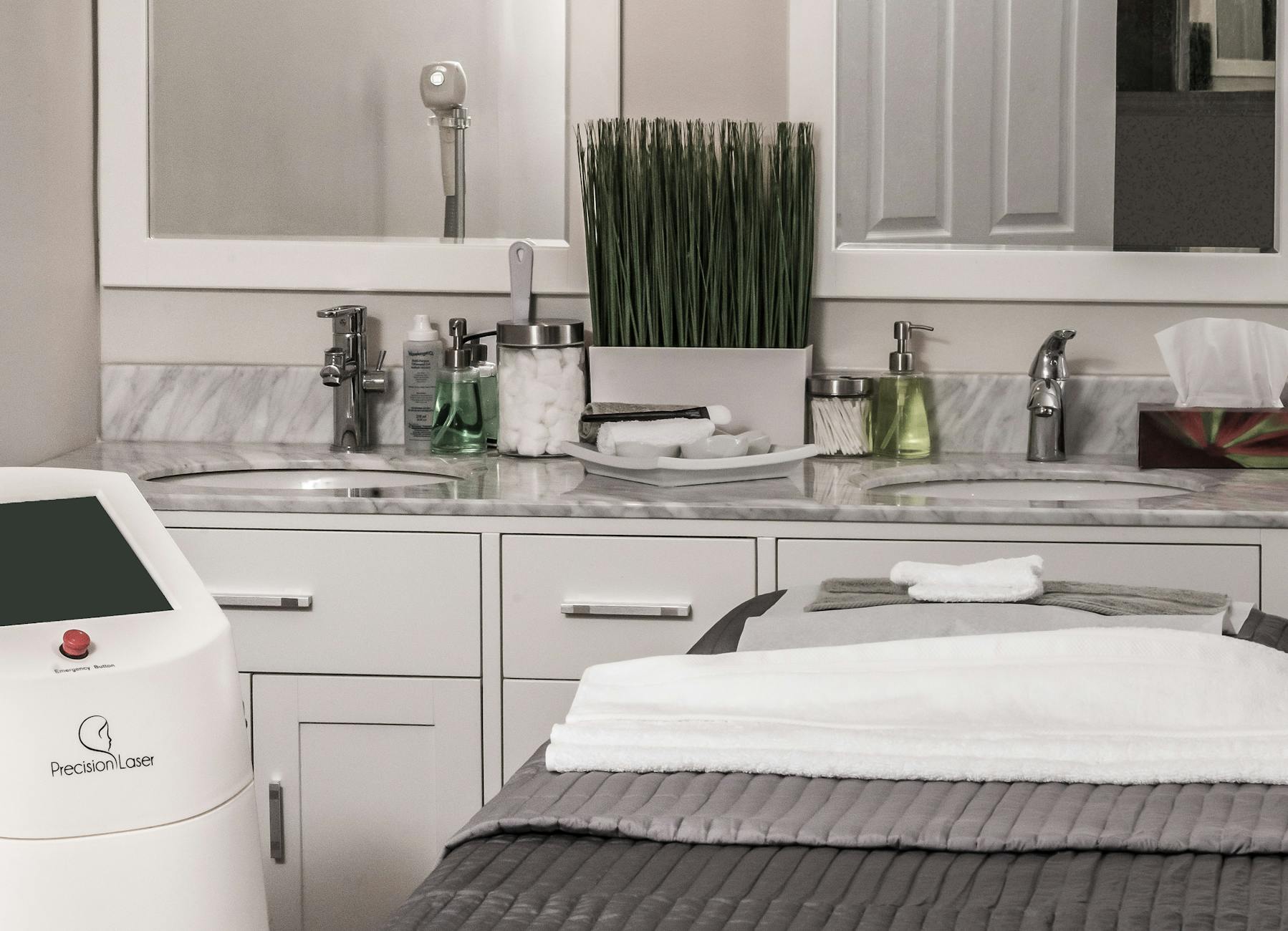
The med spa industry hit $16.4 billion in the U.S. in 2024. It's growing about 14% year over year. New locations are opening in every mid-size city, and the ones that were already there are expanding into new services.
So why are so many med spas still struggling to fill their books?
It's not because the demand isn't there. People want Botox, filler, laser treatments, body contouring. The demand is massive and growing. The problem is how most med spas try to get those people through the door. The same five mistakes show up again and again, and they're expensive.
1. Building your entire business on Instagram
Instagram is the default marketing channel for med spas. It makes sense on the surface: the work is visual, before-and-afters perform well, and everyone's on there.
The problem is that Instagram is rented land. You don't own your audience, Meta does. And they change the rules whenever they feel like it.
In 2023, Instagram's average organic reach dropped to about 9.3% of followers. So if you have 5,000 followers, roughly 465 of them actually see your post. That number keeps shrinking every year. Meta wants you to pay for reach now, and they've rebuilt the algorithm to make sure of it.
We've seen med spas that built 20,000+ follower accounts over several years, then watched their engagement drop by 60% in a single quarter after an algorithm update. All that work, just gone.
Instagram should be part of your mix, not the whole thing. If your phone stopped ringing the day Instagram went down, you have a single point of failure. That's not a marketing strategy, it's a gamble.
2. No system for getting clients to rebook
This one is the most expensive mistake on the list because it's invisible. You don't see the revenue you're losing from clients who came in once and never came back.
Here's the math. Acquiring a new med spa client costs somewhere between $150 and $300 in marketing spend, depending on your market. A repeat client costs almost nothing to retain. And the lifetime value gap is staggering: a client who comes in for Botox every 3-4 months is worth $2,400 to $4,800 per year. A one-time client is worth one treatment.
Yet most med spas spend 90%+ of their marketing budget on acquisition. Getting new people in the door. Almost nothing goes toward retention.
No automated rebooking reminders. No text message when it's been 90 days since their last appointment. No birthday offer, no loyalty program, nothing. The client finishes teh treatment, walks out, and the spa just hopes they remember to come back.
Hope is not a system. The spas that are growing fastest have automated follow-up sequences that re-engage past clients at exactly the right intervals. It's not complicated, but it does need to be intentional.
3. Ignoring Google reviews and local SEO
There's a weird assumption in the med spa world that Google doesn't matter as much because clients find you through Instagram or word of mouth. That's wrong.
When someone is actually ready to book (not just browsing, but credit-card-in-hand ready), they Google. "Med spa near me." "Best Botox in Scottsdale." "Hydrafacial [city name]." That's high-intent search traffic, and it converts at a much higher rate than social media.
The med spas showing up in Google's local 3-pack (those top three map results) are getting the bulk of that traffic. And the biggest factor in local ranking? Reviews. Not just how many you have, but how recent they are and whether you respond to them.
A med spa with 47 reviews (average 4.8 stars, most from the last 6 months) will outrank one with 200 reviews if those 200 are all from 2022 and nobody's responded to any of them. Google cares about recency and engagement.
If you're not actively asking every happy client to leave a Google review, you're handing local search traffic to your competitors. It really is that simple.
4. A website that looks like every other med spa website
Pull up ten med spa websites in any city. Count how many have marble textures, gold accents, script fonts, and some variation of "rejuvenate your natural beauty" on the homepage.
It'll be most of them.
When every website looks the same, none of them stand out. A potential client Googles "med spa near me," opens three tabs, and sees what feels like the same business three times. Nothing differentiates you. So they pick based on whatever random factor catches their eye, or they just go with whoever has more reviews.
Your website needs to answer one question fast: why should I choose you over the place down the road? That answer can't be "we offer Botox, filler, and laser treatments" because everyone offers those. It has to be something specific. Maybe it's your injector's 12 years of experience. Maybe it's your pricing transparency. Maybe it's your guarantee policy or your 4.9-star average across 300+ reviews.
Whatever it is, it should be the first thing someone sees. Not buried on an "About Us" page nobody reads.
The other problem with generic websites: they don't convert. A med spa site without online booking, without a clear call to action above the fold, without social proof near the top of the page, is just a brochure. And brochures don't book appointments at 10pm on a Wednesday, which is when a lot of people are actually searching.
5. Letting leads sit for hours (or days)
This is the one that makes us want to scream.
A potential client fills out a contact form on your website. They're interested right now. They probably filled out a form on one or two other spa websites too, because that's how people shop. The first business to respond wins that client about 78% of the time.
The average response time we've seen from med spas? Over 24 hours. Some take 48. Some never respond at all.
A study from Lead Connect found that responding within 5 minutes makes you 21x more likely to qualify a lead compared to responding in 30 minutes. Not 24 hours. Thirty minutes. The drop-off is that steep.
If you're running ads, this is especially painful. You paid $30 to $50 to get that person to your site and fill out that form. Then you let the lead go cold because nobody checked the inbox until the next morning. That's money straight into the trash.
The fix is automation. An AI chatbot that responds instantly. Automated text confirmations. A system that alerts your front desk the second a form comes in. The technology for this exists and it's not expensive. The only reason med spas don't have it is because nobody set it up.
The common thread
All five of these mistakes come from the same root problem: med spas treat marketing as something you do when the schedule looks empty. Post some before-and-afters, run a discount, hope for the best. There's no system behind it.
The spas that are consistently booked out have marketing that runs whether or not someone remembers to post today. Automated follow-ups. Review requests that go out after every appointment. A website that converts at 2am. Lead response in under a minute. SEO that compounds over months.
That's what we build at TapLoop. We're a growth partner for med spas (and dental practices). We handle the website, the SEO, the AI chatbot, the review generation, and the automated follow-up so you can focus on the actual treatments. If any of these five mistakes sounded familiar, book a free call with us and we'll show you exactly what's fixable and how fast.
Stop losing clients to fixable problems
We'll audit your current marketing and show you where the biggest gaps are. Free, no pressure.
Book a Free CallSources
- American Med Spa Association (AmSpa), "State of the Industry Report 2024." Market sizing, growth rates, and operational benchmarks for the U.S. medical spa industry.
- McKinsey & Company, "The Beauty Market in 2024." Consumer behavior trends and digital channel performance in beauty and wellness services.
Photo by Polina Kovaleva via Pexels